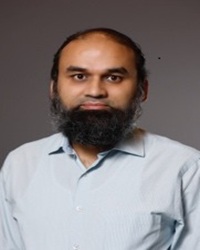
Qadeer Ahmed is an Assistant Professor and director of Mobility Systems Lab (MSL) at the Department of Mechanical and Aerospace Engineering at The Ohio State University and a fellow of OSU’s Center for Automotive Research. His research focus is connected, automated, safe, and energy-efficient vehicular/mobility systems. He has authored more than 127 international peer-reviewed publications. He is a recipient of SAE’s Ralph R. Teetor Educational Award in 2023, SAE's L. Ray Buckendale Award in 2019, and OSU’s Lumley Research Award in 2018.
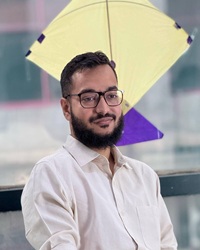
Md. Sakibur Rahman is a Software Engineer specializing in Backend Services, currently working at Omnilab Enterprise Solutions in Dhaka, Bangladesh. With expertise in Spring Boot, PostgreSQL, and microservice architecture, he has contributed significantly to the development of scalable backend systems, including payment gateway integrations and enterprise SaaS platforms. Before this, he worked at Monstarlab Enterprise Solutions, where he led backend development for HRM, payroll, and attendance tracking systems, and implemented secure authentication mechanisms using OAuth 2.0. His technical contributions also include integrating NBD with the Android kernel to cater device resource allocation, the relevant research work “Empirical Analysis of Android Storage Management Using Network Block Device (NBD) Protocol: A Comprehensive Performance and Efficiency Study” that led to a publication in Blockchain: Research and Applications - Elsevier. His interests span backend architecture, system integration, and performance optimization in distributed systems.
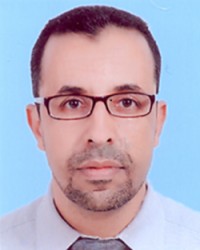
Er. Kritika is a distinguished researcher and dynamic keynote speaker, renowned for her innovative work at the convergence of cybersecurity, AI/ML, data governance, digital forensics, IoT, gamification, OSINT and neuroscience. With a distinguished body of Scopus-indexed publications, book chapters, and authored books, she has consistently pushed the frontiers of knowledge across multiple disciplines. Her exceptional contributions to both academia and industry have been recognized with numerous prestigious awards, including the Trailblazer Award for Security/ Safety in Education (2025), Best Researcher Award (2024), Young Engineer Award (2024), and Young Researcher Award (2023). The author is serving as Member(ISC2), Lifetime Member of International Association of Engineers(IAENG), Member of Women In Cybersecurity(WiCys) India Affiliate, professional member of Institute of Scholars(InSc) and book and journal reviewer for various reputed publications like IEEE, Elsevier, Springer IGI Global, etc. Her visionary research continues to shape the future of technology, making a lasting impact on the global scientific community.
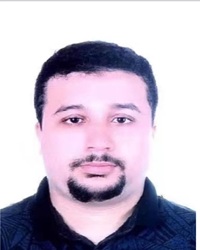
Antonio Pietrosanto (Senior Member IEEE) was born in 1961. He received the Ph.D. degree in electrical engineering from the University of Naples, Naples, Italy, in 1990. He was an Assistant Professor of electrical and electronic measurement with the University of Salerno, Salerno, Italy, from 1991 to 1999. He has been a Full Professor of instrumentation and measurement with the University of Salerno, Fisciano, Italy, since 2001. He has been the Founder of three spin-off companies with the University of Salerno (UniSA): SPRING OFF, Metering Research, and Hippocratica Imaging. He has coauthored more than 150 articles in international journals and conference proceedings. His main research activities include the fields of instrument fault detection and isolation (IFDIA), quantum computing, sensors, wireless sensor networks (WSNs), real-time measurements, embedded systems, metrological characterization of measurement software, advanced system for food quality inspection, and imagebased measurements
Consolatina Liguori was born in Solofra (AV), Italy, in 1969. She received the M.S. degree in Electronic Engineering from the University of Salerno in 1993 and earned her Ph.D. from the University of Cassino in 1997. That same year, she joined the Department of Industrial Engineering at the University of Cassino as an Assistant Professor of Electrical Measurements. From 2001 to 2013, she served as an Associate Professor of Electrical and Electronic Measurements, and in 2010 she became affiliated with the Department of Industrial Engineering at the University of Salerno. Since December 2012, she has been a Full Professor of Electrical and Electronic Measurements. Her main research interests include digital signal processing, image-based measurement systems, quantum computing, measurement characterization, and instrument fault detection and isolation.
Marco Carratù, IEEE Senior Member (2024), received his Ph.D. from the University of Salerno in 2019 and currently serves as an Associate Professor at the Department of Industrial Engineering, specializing in the field of Electronic Measurements. His main research interests include NMR Quantum Computing, Instrument Fault Detection and Isolation, digital signal processing for advanced instrumentation, embedded measurement systems, and the application of artificial intelligence techniques for the indirect measurement of physical quantities, with a particular focus on measurement uncertainty in Machine Learning contexts. He is the author of numerous peer-reviewed scientific papers published in international journals and conferences, in collaboration with esteemed researchers worldwide. He is a member of the IEEE Instrumentation & Measurement Society and the Italian Group of Electrical and Electronic Measurements (GMEE).He serves as an Associate Editor for the IEEE Open Journal of Instrumentation and Measurement (OJIM) and IEEE Transactions on Instrumentation and Measurement (TIM), and regularly acts as a reviewer for other leading journals in the field of instrumentation and electronic measurements. Since 2019, he has been a member of the IMEKO Technical Committee TC10 on Technical Diagnostics and the IEEE IMS Technical Committee TC-37.
He received the PhD degree in Signal Processing in 2000 and his Habilitation to Supervise Research in 2005, both from the Faculty of Sciences at Ibnou Zohr University, Morocco. In 2015, he was appointed Full Professor in Intelligent Embedded Systems. He currently holds a full professorship in the Department of Industrial & Electrical Engineering at National School of Applied Sciences, Ibnou Zohr University, Agadir, Morocco. His research interests encompass intelligent embedded systems, hardware/software co-design, water quality monitoring, remote vegetation quality assessment using embedded artificial intelligence, IoT-based approaches, and UAV/Drone-mounted camera modules. He also focuses on remote monitoring of physiological and behavioral indicators in various case studies, including patients affected by the COVID-19 pandemic, automotive driver safety, and premature infants. Additionally, he investigates the complexity and acceleration of embedded vision and AI algorithms and works extensively on high-level synthesis (HLS) and heterogeneous embedded platforms such as OpenMP, OpenCL, OpenACC, CUDA, ARM technologies, ARM-FPGA, and ARM-GPU. From 2006 to 2014, he led the Signals, Systems, and Computer Science group (ESSI). He founded and directed the LISTI Laboratory in December 2014 and has served as the head of the Master’s program in Intelligent Embedded Systems for Industrial Applications. Professor Rachid LATIF is the founder and current president of the Moroccan Society of Embedded Systems (MSES), established in 2018 at ENSA Agadir. Since 2007, he has been responsible for numerous R&D and innovation projects. He served as a member and expert for the CNRST Morocco from 2018 to 2021 and has resumed this role since 2025.
Dr. Zerdoumi Saber holds a PhD in Computer Science from Taylor University, with a research focus on machine learning, spatial data modeling, and intelligent systems. His interdisciplinary work bridges predictive analytics, image pattern recognition, geospatial AI, and smart technologies for sustainable development. He has published in high-impact venues, including 'Meta-Prediction: Uncovering Patterns and Enhancing Predictive Accuracy through Self-Learning Algorithms,' 'Image Pattern Recognition in Big Data: Taxonomy and Open Challenges,' and 'A New Platform Based on Various Sensors Offers Smart Contracts to Reduce Carbon Emissions.' Dr. Saber has collaborated with academic and industrial partners on AI-driven solutions for real-time forecasting, urban intelligence, and environmental monitoring. He has also contributed to teaching and mentoring in machine learning, data visualization, and algorithm design.
Neeshu Rathi is a PhD scholar in the Department of Mathematics at the Indian Institute of Technology Roorkee, Uttarakhand, India. Her research focuses on quantum algorithms for Krylov subspace methods and quantum machine learning, with significant contributions to quantum conjugate gradient methods, quantum GMRES and Arnoldi algorithms, and quantum ensemble learning frameworks with shallow and noise-resilient circuits. Her work has resulted in publications in journals such as Soft Computing and Concurrency and Computation: Practice and Experience, with several manuscripts currently under review. Her research interests include quantum iterative solvers, quantum ensemble and bagging algorithms, quantum linear algebra, and resource-efficient quantum machine learning methods.
Ms. Viveros is a distinguished International Lawyer and Scholar; Trusted Expert and Senior Advisor
on AI and Peace and Security; and an Advocate and leading voice for Sustainable Development in
the Global South.
She is the Founder, Managing Director and CEO of IQuilibriumAI, a Consultancy Firm specialized on
AI and Peace, Security, Humanitarian, Environmental and Rule of Law issues, the President of the
HumAIne Foundation and the Founder of the Global South Synergies and Resilience Platform,
serving in different capacities across these fields to bolster scalable and expansive meaningful
impact, with a special focus on the Global South and conflict and post conflict zones.
Dr. Rasha Ahmed Al-Rkebat is a distinguished Jordanian Scientist in Earth System Sciences and Policy, specializing in applying Systems Thinking to integrated national security challenges. She is a representative researcher at the National Agricultural Research Center (NARC), focusing on geospatial analysis and AI-enabled solutions for water and food security. Dr. Al-Rkebat is actively engaged in pioneering research on Climate Change Adaptation in Jordan's Water Sector and Institutional Analysis of Women's Empowerment in the Agricultural Sector.
Dan Belnap is the center engineering manager and is a scientific advisor at MegaDiamond Technology Center/SLB corporation, Utah, USA. Dan has worked at MegaDiamond for nearly 30 years in various engineering and research roles. He has over 70 issued patents for his work on diamond technology and has authored/coauthored numerous articles related to his development work. Dan’s educational background is materials science, in which he received a Ph.D. from the University of Utah. His work has contributed significantly to the success of his company, and he has been recognized twice by the industry group Harts E&P for development of unique diamond tools for the oil and gas industry. His primary interest is employing high pressure materials science to create new diamond-based materials for use in various applications. In his role at MegaDiamond Technology Center, Dan has had the privilege of working with a highly talented and motivated team which has made these many accomplishments possible. In his role as SLB scientific advisor he also has the opportunity to work with technical experts across an international company on a variety of topics.
Currently serves as Dean of the College of Physical Education at Wuhan Sports University. He is the principal investigator for the National First-Class Undergraduate Program in Physical Education, and the leading coordinator for the doctoral and master’s degree programs in Physical Education and Training Science. He also serves as Vice Chair of the Sports Professional Committee of the Hubei Education Association. He has been selected for the “Hundred Outstanding Young and Middle-Aged Professional and Technical Talents Program” of the General Administration of Sport of China and honored as a “Hubei Distinguished Teacher.”
Sllife Nyazabe is a Ph.D. Candidate at the Graduate School of Global Digital Innovation, KAIST, specializing in Management Information Systems (MIS) and Digital Innovation. His research focuses on the behavioral architecture of digital financial systems – specifically mobile money – where he examines user trust, adoption, and economic outcomes in Sub-Saharan Africa.
In parallel, he conducts high-impact research on Artificial Intelligence (AI) and algorithmic systems, with a specific emphasis on how generative AI and decision-support technologies influence human cognition, learning, and institutional outcomes.
Working at the intersection of digital finance, behavioral modeling, and policy, he has established a strong record of translating empirical data into actionable insights for financial institutions, regulators, and innovation labs. His most recent work, published in Telematics and Informatics Reports, explores the systemic influence of social signals and repeated exposure on user behavior within closed-loop digital environments like WhatsApp.