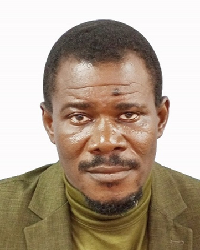
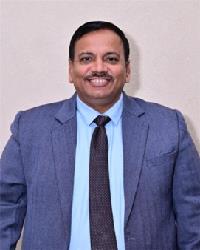
Alexis Sompougdou is a forest Engineer and a PhD student in rural development/Forest Production system at University of Nazi BONI/Bobo Dioulasso in Tree Aid Burkina Faso. With expertise in forest governance, ecosystem services, biodiversity, nature based solution and Non Timber Forest Products value chains, natural resources management, rural development issues in sub-Saharan Africa in general and Burkina Faso in particular, technology transfer to rural development actors, international development cooperation and official development assistance, participatory development approaches; he has contributed significantly to build a strong forest governance model for Burkina Faso, to establish village tree enterprises with more than 15 years experiences. My research interests include climate change, agroforestry and forest management, forest governance, land use and land restoration, the resilience of poor communities, the vulnerability of women and young people in West Africa, the impact of renewable energy sources, livelihoods, and payment for ecosystem services, carbon credits and issues of deforestation, rainfall, and drought.
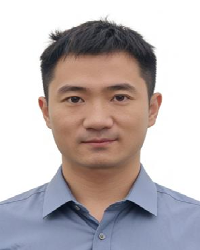
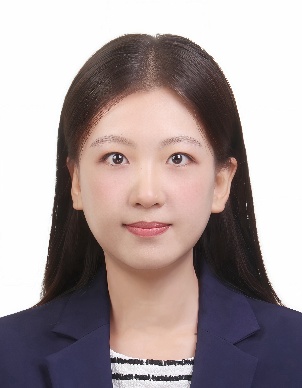
Dr. Peijia Bai obtained his Ph.D. from Nankai University, supervised by Prof. Rujun Ma and affiliated with Academician Yongsheng Chen's team. He was awarded the Excellent Doctoral Dissertation of Nankai University. He subsequently pursued postdoctoral research at Beihang University-Tianmushan Laboratory under the guidance of Academician Huibin Xu and Prof. Yibin Li (Second-Class Professor).
His primary research focuses on the development of high-efficiency thermal management devices, fabrication of ultrafast thermal response phase change materials, and protective color radiative cooling coatings. Relevant achievements have been published in prestigious journals including Science (second author), Advanced Materials (×2), Nature Communications, Applied Thermal Engineering, and iScience. Many of his works are listed as ESI Highly Cited Papers, with an H-index of 16, cumulative impact factor exceeding 470, and total citations nearly 1,000. He holds 3 authorized national invention patents, serves as a Young Editorial Board Member for journals such as Renewable and Sustainable Energy and cScience.
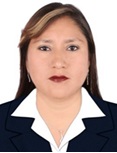
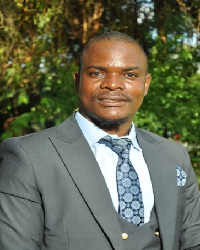
Yovana Viviana Alvarez Robles is a Geophysical Engineer with more than 10 years of experience, with knowledge in applied geophysics performing acquisition, processing and interpretation of data in Geo-electrical and electromagnetic methods, application of geophysical methods to the study of volcanoes, offshore 2D seismic acquisition. Participation in Geophysical exploration work in areas of mining, geotechnics, oil, environment and volcanology. Participation in research projects.
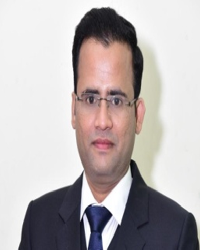
Dr. Faizan Khalid is a faculty member at the Center for Integrated Green and Renewable Energy, Aligarh Muslim University (AMU). He earned his Ph.D. in Mechanical Engineering from Delhi Technological University (DTU), specializing in thermodynamic analysis of solar-based polygeneration systems. With teaching and research experience at institutions including IIT Guwahati, Jamia Millia Islamia, and Gautam Buddha University, Dr. Khalid has developed expertise in renewable energy, hydrogen production, and integrated energy systems. He has published multiple Q1 journal papers in International Journal of Hydrogen Energy, International Journal of Energy Research, and International Journal of Exergy, along with book chapters in Elsevier and Springer. His research focuses on solar energy, hydrogen systems, trigeneration cycles, and green building technologies.
Dr. Khalid has presented at several international conferences in Turkey, Qatar, and India, and received the Commendable Research Excellence Award (2022, 2023, 2024) from DTU. He is also actively involved in academic administration, supervision of postgraduate dissertations, and organizing expert lectures in the field of renewable energy.
Deenbandhu Chhotu Ram University of Sc. Technology Murthal
Speaker
Satish Kumar
Deenbandhu Chhotu Ram University of Sc. Technology Murthal
Dr. Satish Kumar is presently working as Professor, Physics Department, Deenbandhu Chhotu Ram University of Science and Technology, Murthal (Haryana), India. He has 30 years of teaching along with respectable research experience. His research interests include Synthesis, Characterization and properties of nanocomposites, oxide glasses, glass ceramics, hydroelectric cell and WLED materials. During this period, different techniques (like EPR, Electric conductivity, DSC, UV-Vis-NiR Spectrometer, Luminescence Spectrometer, SEM, Impedance Analyser etc.) have been used to study the effect of various ion probes on structure, optical, photoluminescence, morphology, ionic conductivity and thermal behavior of transition metals (vanadium, nickel, cobalt, Iron, Dysprosium, Erbium, praseodymium etc.) doped in oxide glasses (namely Borate, Phosphate and Boro-Vanadate Glasses). Eight PhD thesis have been submitted during this tenure. NBT based Hydro Eclectic Cell ( HECs) delivered 1.05 mA and 0.92 V, significantly higher outputs were achieved with 0.50NBT-0.50MFO (8.23 mA, 1.0 V), 0.20NBT-0.80ZFO (9.35 mA, 0.97 V), 0.20NBT-0.80NMFO (10.82 mA, 0.96 V) and NMFO (14.65 mA, 0.98 V), all measured over HEC of 4 cm² area and all works are published in internal reputed Journals like Ceramic International. He has published more than 130 papers in WoS/ Scopus journals along with three text books for undergraduate classes.
Anqi Wang is a third-year Ph.D. candidate at the College of Resources and Environmental Sciences, China Agricultural University, and currently a visiting student at the School of Civil and Environmental Engineering, University of Technology Sydney (UTS), under a joint-training program. Her research focuses on aerobic fermentation of organic solid wastes for resource recovery and harmless treatment, with a special interest in efficient nitrogen retention during composting. She has systematically investigated how carbon biodegradability regulates microbial ammonia assimilation, demonstrating that balanced labile and recalcitrant carbon sources sustain the tricarboxylic acid cycle, enhance α-ketoglutarate supply, and thereby improve organic nitrogen formation. Her work offers mechanistic guidance for optimizing carbon quality to mitigate nitrogen loss in composting systems. Anqi has co-authored five peer-reviewed papers in journals such as Bioresource Technology and Environmental Technology & Innovation. She has participated in two National Key R&D Programs of China on agricultural waste valorization. At UTS, she collaborates on projects integrating isotopic tracing and metagenomics to advance composting technologies. Her broader research interests include microbial inoculant development for organic waste treatment.
Dr. Regret Sunge is a Lecturer in Economics at the University of the Free State and an NRF-rated (Y2) researcher specializing in environmental and development. He holds a PhD in Economics from the University of Johannesburg and has published extensively on carbon emissions, ecological footprints, agricultural productivity, and sustainability in Africa. His research integrates advanced econometric and spatial modeling techniques to inform evidence-based environmental policy. Dr. Sunge has presented at international conferences and contributed to policy-oriented research with institutions including the OECD and UN-ECA, focusing on climate change, sustainable development, and economic resilience in Africa.
Deenbandhu Chhotu Ram University of Sc. Technology Murthal
Speaker
Satish Kumar
Deenbandhu Chhotu Ram University of Sc. Technology Murthal
Dr. Satish Kumar is presently working as Professor, Physics Department, Deenbandhu Chhotu Ram University of Science and Technology, Murthal (Haryana), India. He has 30 years of teaching along with respectable research experience. His research interests include Synthesis, Characterization and properties of nanocomposites, oxide glasses, glass ceramics, hydroelectric cell and WLED materials. During this period, different techniques (like EPR, Electric conductivity, DSC, UV-Vis-NiR Spectrometer, Luminescence Spectrometer, SEM, Impedance Analyser etc.) have been used to study the effect of various ion probes on structure, optical, photoluminescence, morphology, ionic conductivity and thermal behavior of transition metals (vanadium, nickel, cobalt, Iron, Dysprosium, Erbium, praseodymium etc.) doped in oxide glasses (namely Borate, Phosphate and Boro-Vanadate Glasses). Eight PhD thesis have been submitted during this tenure. NBT based Hydro Eclectic Cell ( HECs) delivered 1.05 mA and 0.92 V, significantly higher outputs were achieved with 0.50NBT-0.50MFO (8.23 mA, 1.0 V), 0.20NBT-0.80ZFO (9.35 mA, 0.97 V), 0.20NBT-0.80NMFO (10.82 mA, 0.96 V) and NMFO (14.65 mA, 0.98 V), all measured over HEC of 4 cm² area and all works are published in internal reputed Journals like Ceramic International. He has published more than 130 papers in WoS/ Scopus journals along with three text books for undergraduate classes.
Anqi Wang is a third-year Ph.D. candidate at the College of Resources and Environmental Sciences, China Agricultural University, and currently a visiting student at the School of Civil and Environmental Engineering, University of Technology Sydney (UTS), under a joint-training program. Her research focuses on aerobic fermentation of organic solid wastes for resource recovery and harmless treatment, with a special interest in efficient nitrogen retention during composting. She has systematically investigated how carbon biodegradability regulates microbial ammonia assimilation, demonstrating that balanced labile and recalcitrant carbon sources sustain the tricarboxylic acid cycle, enhance α-ketoglutarate supply, and thereby improve organic nitrogen formation. Her work offers mechanistic guidance for optimizing carbon quality to mitigate nitrogen loss in composting systems. Anqi has co-authored five peer-reviewed papers in journals such as Bioresource Technology and Environmental Technology & Innovation. She has participated in two National Key R&D Programs of China on agricultural waste valorization. At UTS, she collaborates on projects integrating isotopic tracing and metagenomics to advance composting technologies. Her broader research interests include microbial inoculant development for organic waste treatment.